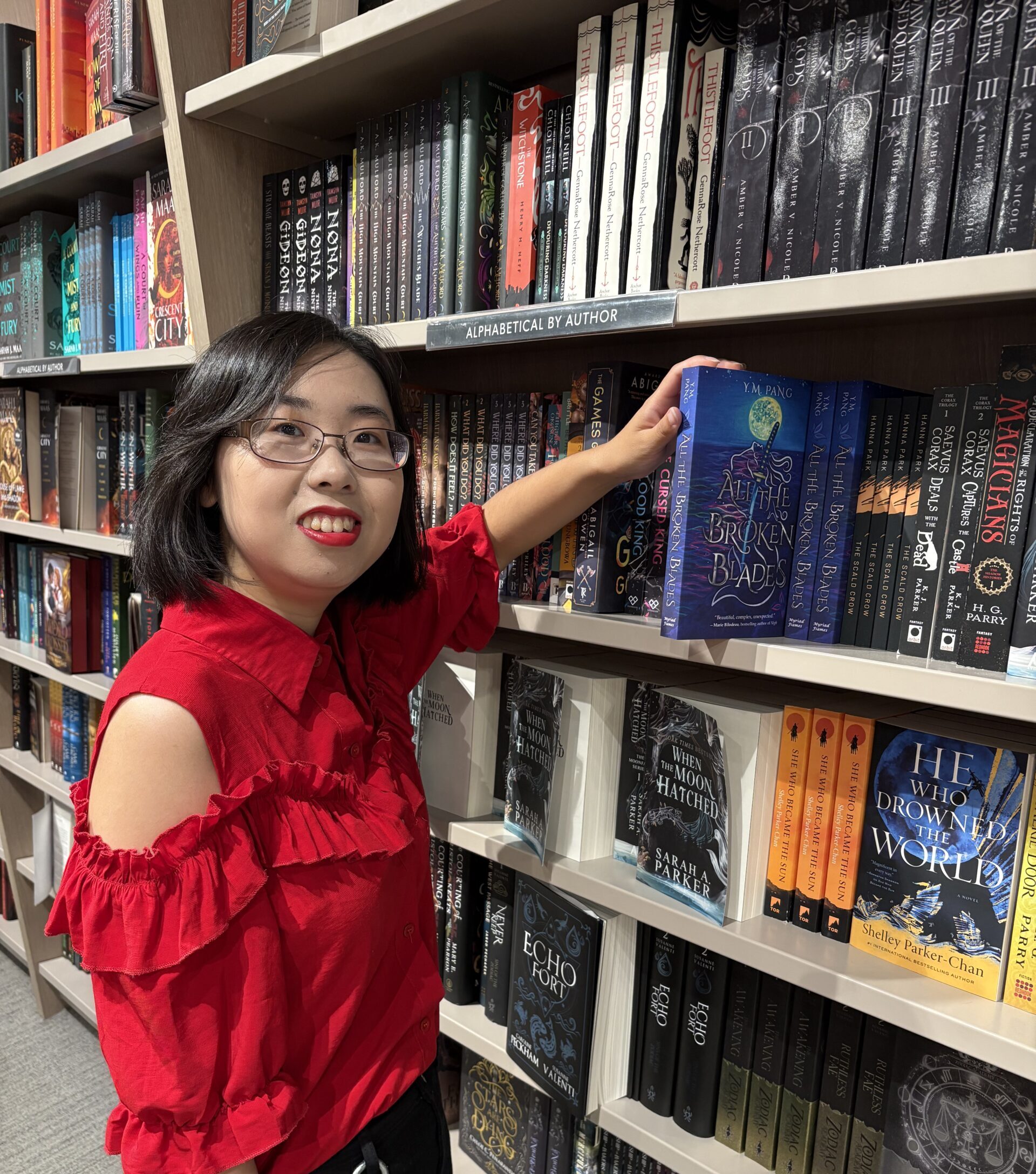
I suck at celebrating anniversaries and milestones. I skip my birthday two years out of three. I hold two degrees and missed convocation both times. As you can tell from the slightly depressing title, this is no exception. But I swear, this is my attempt at celebrating an anniversary.
Today is May 28, the release date for All the Broken Blades. My book is one year old! *insert unenthusiastic cheer* I originally planned on writing a breakdown of my entire self-publication process, which would also double as a Self-Publishing 101 guide. That’s still coming. But I’m nose-to-the-grindstone on another project right now, and I want that breakdown to have the depth and detail it deserves—depth and detail I can’t give it right now.
So on the exact date of May 28, I offer this instead: my thoughts on self-publishing my debut short story collection and, one year on, if I wish I’d done it differently. Perhaps this will help you make your own decisions on whether to self-publish.
Did you try finding a literary agent and/or publisher for All the Broken Blades?
No, I did not. I did not send one query letter, one submission, or make a single pitch at a conference or online event. Self-publishing was not a destination I arrived at after exhausting other avenues; it was a conscious decision from the beginning.
Stupid? Maybe. But with reasons? Yes.
Is it because traditional publishing is slow?
Exactly. I wanted a book published and available as soon as possible. I was six or seven years into my career at this point (in 2024 when I started planning a short story collection). I had publications in Strange Horizons, The Magazine of Fantasy & Science Fiction, Beneath Ceaseless Skies, and still no book to my name. It was starting to feel silly saying, “Hi, I’m a professional writer (by SFWA-qualifying standards, not by can-live-off-my-writing standards), go find my stuff in all these back issues of various magazines.”
Traditional publishing is slow. There are time gaps between agent submission and agent response, publisher submission and publisher response, acceptance and edits and release. Working independently, it took about seven months from the Kickstarter to the book release. A traditional publisher would not have released it so quickly (sometimes they take that long just to respond to your submission). Putting my book through the cycle of traditional publishing would’ve meant delaying it for years—if it gets released at all.
If I have one clear regret, it is not putting together a collection sooner. I had enough material by 2021. I left out half of my published works from All the Broken Blades; as my proofreader puts it, ain’t nobody reading a 150,000-word short story collection.
So it sounds like you have no regrets then?
Not exactly. See, there is time and there is time. Traditional publishing results in a later release date, but also less non-writing work for the author. The publisher deals with book production. Though I would’ve spent longer waiting, I could’ve spent that waiting period writing more material, rather than seven months scrambling around like a headless chicken to deal with cover design, interiors, ISBNs, and Kickstarter rewards.
Self-publishing is a lot of work, especially if you want your book to look professional. I have such incredible respect for my peers who built a career from it—I don’t know how y’all find time to write. Or sleep.
There is a lot a publisher can do for you, even a small publisher. Sometimes I look to writers who had books released with a small press, and I see their publishers booking events for them or making their books available in tiny independent bookstores. I think of their sales numbers versus mine, and I wonder about the possibilities. Could I achieve the same things? Of course, and there are many self-published authors who do. I’d just need to book those events myself, call those bookstores directly, and run my own promotional campaigns. Time, work, money.
So… were there good parts to self-publishing?
Yes, of course! Firstly, it did accomplish my basic goal: having a book to sell, having a place to point my readers toward if they wished to support me.
I was able to hold two launch parties, one at the dearly departed Imperial Pub and one at the pillar of science fiction and fantasy that is Bakka-Phoenix Bookstore. I attended Word on the Street and Can*Con, and sold many books at both events. I had two different author events at Indigo. And I’m planning to attend many more events this year, including Indie Fusion BookCon.
I also enjoyed having creative control over the book production. I mean, how many traditionally published authors can say their cover art is a physical acrylic painting, created specifically with their book in mind? (Original artwork isn’t actually a guarantee for your book cover—many publishers license stock images which are then incorporated into a cover design.) How many can say their artist also created a custom interior border and scene breaks?

Mandatory plugs here:
My cover artist: Lana Kamaric
My cover designer: Tony Sahara
My book looks the way I want it to, and that might never happen in the traditional publishing world.
So if you could go back, what would you do?
If I could go back to 2021, I think I would’ve tried compiling a short story collection then. It wouldn’t be thematic like All the Broken Blades. It’ll just be my publications from 2018 to 2021—which, granted, seems to be how many authors do it.
Knowing what I do now about querying, I don’t think I will try to find a literary agent with it. Very few agents accept short story collections owing to how difficult it is to sell them to a major publisher. Some mid-sized or small presses do take them. But I don’t exactly need an agent to submit to a smaller press.
So, 2021 me would probably try submitting the book to a few mid-sized publishers. If no bites in a year, I’ll release it myself.
But Michelle, that wasn’t the question. That hypothetical book wouldn’t even be All the Broken Blades, because it would’ve been composed of a very different set of stories.
And that’s a fair statement. So let’s not go back so far. Let’s return to 2024. These fourteen stories and these two poems, centred on epic fantasy and fairy tale retellings. Would I have done anything differently, knowing what I know now?
That is a difficult question. The agent answer remains the same. But I’m juuuust arrogant/delusional enough to think that maybe, maybe a small or mid-sized press might’ve picked it up, and I should’ve tried a few targeted pitches or submissions. I might have a more successful book that way.
On the other hand, All the Broken Blades still wouldn’t be released (even if it had gotten acquired; publishing is slow, remember?). And I’d be living in a universe where my physical book looks significantly different, and I’m not sure I want that universe.
Will you self-publish again?
I still have a lot of short stories that haven’t found a home in All the Broken Blades. They’re stories that appeared in Asimov’s, Clarkesworld, Escape Pod, etc. and they deserve a book of their own. As for whether I’m going to submit it to a publisher or self-publish it… Honestly, I don’t know. I feel like I learned a lot from All the Broken Blades and I’m excited to apply some of those lessons for my next short story collection. Then again, I also wouldn’t mind a different experience of working with a publisher.
As for whether I’d self-publish a novel in the future: my current answer is I’d like to give it a shot in the querying/submission trenches first.
….Oh my, this was supposed to be a quick post in lieu of the self-publishing guide. It’s getting long. Let me sign off here. Stay hydrated, keep writing, and leave your questions in the comments!


